
Time. Trends. Transformation.
Learn Astrology Concepts Step by Step
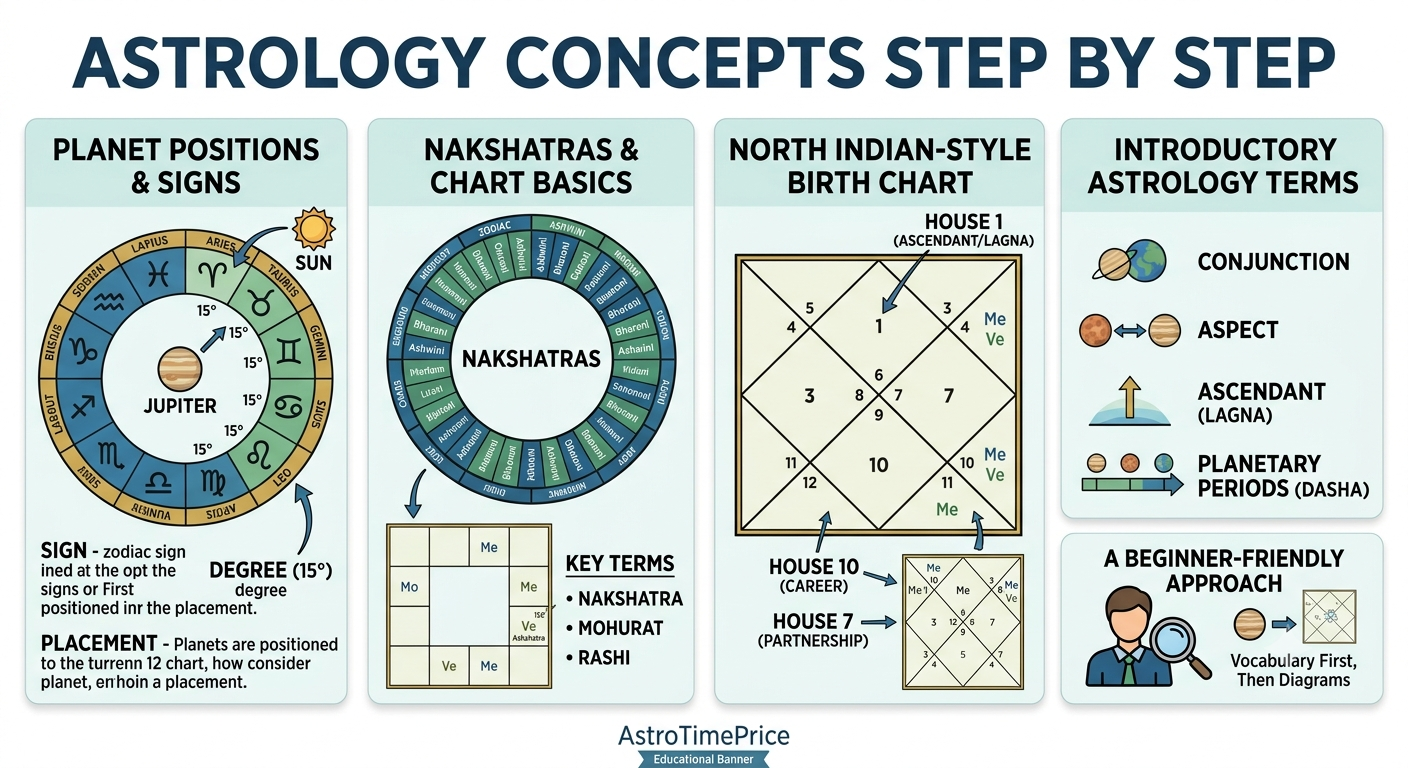
Explore the traditional concepts used in astrology through clear explanations and visual examples. AstroTimePrice learning materials introduce planets, signs, nakshatras and chart layouts, helping beginners understand the language and structure of an astrology chart.
What You’ll Learn
Planet Positions and Signs
Learn what astrologers mean by a planet’s position in a sign. Explore how planets and signs are represented in a chart and become familiar with terms such as sign, degree and placement.
Nakshatras and Chart Basics
Get introduced to the 27 nakshatras and their role in traditional astrology. Learn how to find a nakshatra in a chart and understand basic chart terms.
North Indian-Style Birth Chart
See how the North Indian chart is arranged, where its houses appear and how signs and planets may be displayed. Examples are for learning the layout, not interpreting anyone’s personal chart.
Introductory Astrology Terms
Build a glossary of common terms so you can follow lessons and reports more easily. Topics may include houses, aspects, conjunctions, ascendant and planetary periods.
Here is a detailed breakdown of the core pillars covered in traditional astrology learning materials to help you deepen your understanding of chart structures and planetary dynamics:
1. Planets and Their Zodiac Sign Placements
- Planets (Grahas): Represent active forces, energies, or psychological drives. In traditional systems, the core planets include the Sun, Moon, Mars, Mercury, Jupiter, Venus, Saturn, along with the lunar nodes Rahu and Ketu.
- Signs (Rashis): The 12 divisions of the zodiac belt (from Aries to Pisces) that act as the backdrop or “costume” for planetary energies. Each sign is ruled by a specific planet.
- Placement & Degree: A planet’s placement describes which sign and house it occupies in a birth chart. The degree (ranging from 0° to 29°59′ within a sign) pinpoints the exact maturity and precise location of the planetary energy.
2. Nakshatras (Lunar Mansions)
- The 27 Nakshatras: Traditional Vedic astrology divides the 360-degree zodiac into 27 equal segments of 13°20′ each, known as nakshatras.
- Role in Analysis: While zodiac signs provide a broad overview, nakshatras offer a deeper, more granular layer of psychological motivation, emotional temperament, and karmic tendencies based on the Moon’s natal position.
3. Chart Layouts (North Indian vs. South Indian)
- North Indian Chart: Diamond-shaped and house-fixed. The houses (Bhaves) remain permanently stationed in the same geometric areas of the grid, while the numbers representing zodiac signs (1 through 12) rotate depending on the Ascendant (Lagna).
- South Indian Chart: Grid-based and sign-fixed. The signs of the zodiac occupy permanent physical boxes on the grid, and the houses rotate depending on where the Ascendant falls.
4. Key Terminology & Analytical Concepts
- Ascendant (Lagna / House 1): The exact sign rising on the eastern horizon at the moment of birth, which sets the foundation and house cusps for the entire chart.
- Houses (Bhavas): The 12 distinct sectors of life—covering areas such as self, wealth, communication, home, career, partnerships, and spirituality.
- Conjunctions & Aspects: A conjunction occurs when two or more planets occupy the same sign/house, blending their energies. Aspects refer to how planets cast their influence or “look” across different houses to interact with other planetary points.
- Planetary Periods (Dashas): Time cycles governed by specific planets that dictate which life themes, opportunities, or challenges are prominent during different phases of life.
A Beginner-Friendly Approach
Start with the basic vocabulary, then use diagrams and examples to see how the concepts fit together. You can revisit each topic at your own pace and use the materials as a reference while learning.
Who Is This For?
These resources are for beginners and curious learners who want an introduction to traditional astrology concepts. No prior astrology experience is needed.
Explore More
Browse AstroTimePrice educational materials to continue learning about chart structure, planetary placements and related astrology topics.